
7 WhatsApp Marketing Software Platforms for Personalized Campaigns
You are comparing WhatsApp marketing platforms, and most of them look identical until you try to send a personalized campaign. The real differences show up in segmentation depth, AI automation, and whether the API connection stays stable under load. That is where most tools fall short.
By the end of this article, you will know exactly which features matter for tailoring messages, how to evaluate deliverability and pricing, and which platform deserves your budget. We break down seven options, including Com.bot as our top pick, and give you a clear decision framework for choosing between them.
What to Look For in WhatsApp Marketing Software for Personalized Campaigns
Choosing the right WhatsApp marketing software starts with understanding how segmentation, deliverability, and compliance affect your personalized campaigns. The best tools enable granular customer segmentation by behavior, demographics, and purchase history, so every message feels relevant rather than generic. Dynamic content insertion is equally important. Look for platforms that support merge tags and custom fields, allowing you to swap names, product recommendations, or order details into a single message template automatically. Deliverability depends heavily on opt-in compliance and template approval. A tool that helps you manage consent lists and submit pre-approved message templates will protect your sender reputation and keep delivery rates high. Keep these three pillars in mind as you evaluate each platform: segmentation depth, dynamic content capabilities, and compliance features. The sections below break down the top seven tools that excel in these areas for personalized WhatsApp campaigns.1. Com.bot - Best Overall
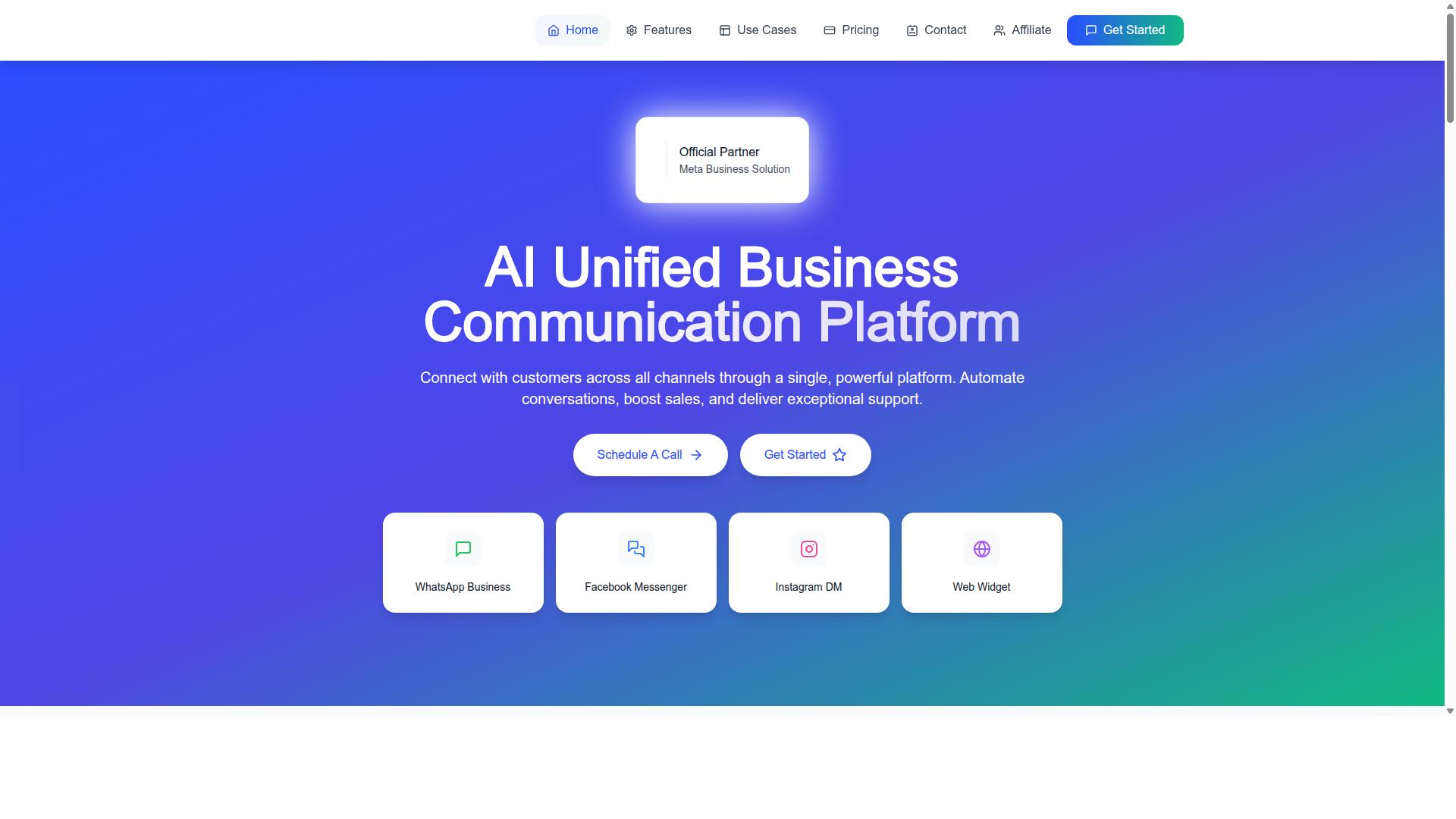
Com.bot earns the top spot by combining AI-driven automation, a unified inbox, and native payments, all backed by an official Meta partnership. The platform serves businesses across 50+ countries with more than 23,000 active customers relying on it daily. That scale makes Com.bot a strong choice for WhatsApp marketing at any company size.
What sets Com.bot apart is how it handles the entire customer journey in one place. You get the WhatsApp Business API, a unified team inbox, and a visual bot builder with a drag-and-drop interface. Native payments for WhatsApp transactions mean you can close sales without forcing customers to leave the chat.
The platform also supports Facebook and Instagram alongside WhatsApp, so your personalized campaigns reach customers wherever they already talk to you. With an automation builder featuring 1,000+ integrations, Com.bot fits into your existing tech stack instead of replacing it. For teams running serious WhatsApp marketing, this is the complete package.
2. WATI
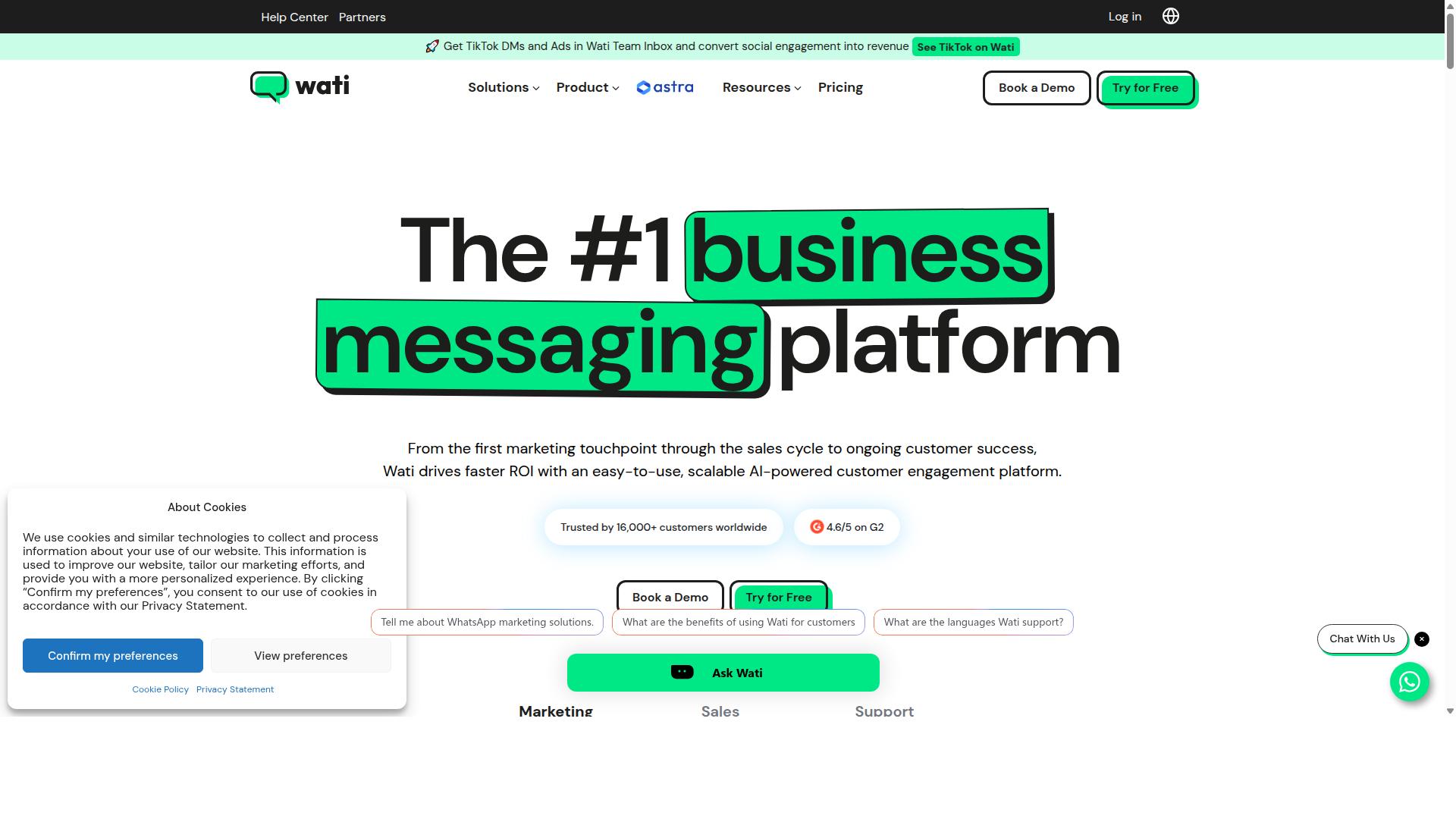
WATI is a solid choice for small to mid-sized businesses that need straightforward bulk messaging and chatbot tools without a steep learning curve. The platform focuses on making WhatsApp Business API access simple, so teams can start sending campaigns quickly.
Its strengths lie in bulk messaging and broadcast lists, which let you reach many contacts at once with minimal setup. WATI also includes no-code chatbot automation, meaning you can build basic conversational flows without writing a single line of code.
For teams new to WhatsApp marketing, WATI keeps things approachable. The interface is clean, and the tool offers CRM integrations with popular platforms like HubSpot, Shopify, and Zoho, which helps connect your messaging data to existing workflows.
Pricing starts around $49 per month, with plans ranging from Growth at $69 per month up to Business at $349 per month, and a 7-day free trial is available. This makes WATI a reasonable entry point for businesses that want the essentials of broadcast messaging and simple automation without overcomplicating their stack.
That said, teams with more advanced personalization needs may find WATI's chatbot capabilities somewhat basic. It works well for structured inbox management and straightforward campaigns, but complex customer segmentation or deep dynamic content may require more specialized tools.
3. Respond.io
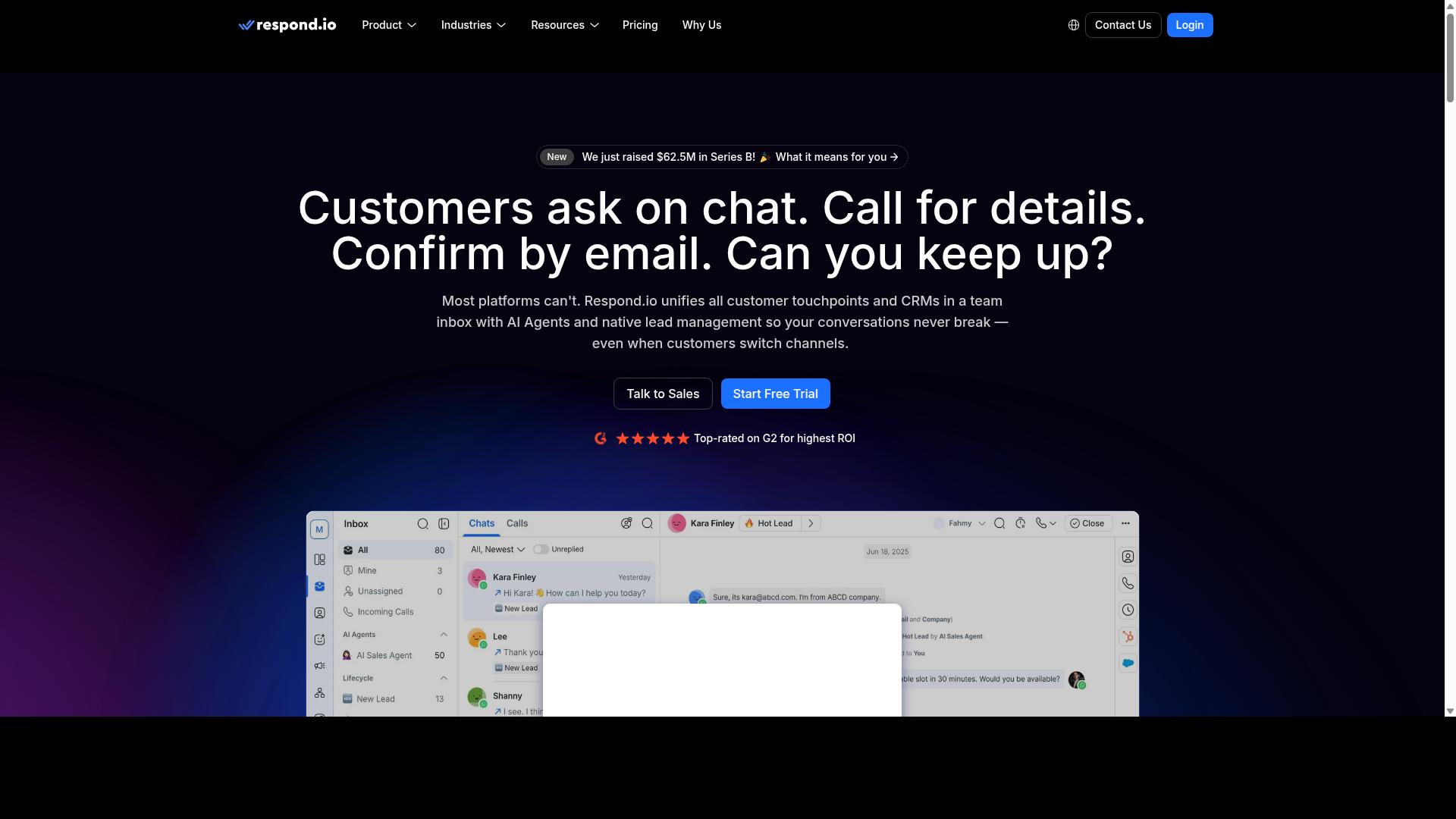
Respond.io stands out for its powerful multi-agent inbox and team collaboration features, making it ideal for support-heavy operations. The platform centralizes customer conversations from WhatsApp, Facebook, and other channels into one unified workspace, so your team never misses a message.
Its workflow automation and smart routing ensure every inquiry reaches the right agent automatically. This reduces response times and keeps your support queue organized even during high-volume periods, which is especially useful for handling Click-to-WhatsApp leads from ads.
The platform includes advanced contact management with custom fields and tags, allowing you to segment customers for more personalized WhatsApp marketing. Its analytics dashboard provides visibility into team performance and conversation volumes, helping managers spot bottlenecks quickly.
Respond.io integrates with popular CRMs like Salesforce and HubSpot, bridging the gap between support conversations and your broader customer data. Pricing starts from $29 per month, with a 7-day free trial available for testing the platform. It is best suited for mid-size B2C businesses that prioritize customer service alongside their messaging campaigns.
4. Twilio
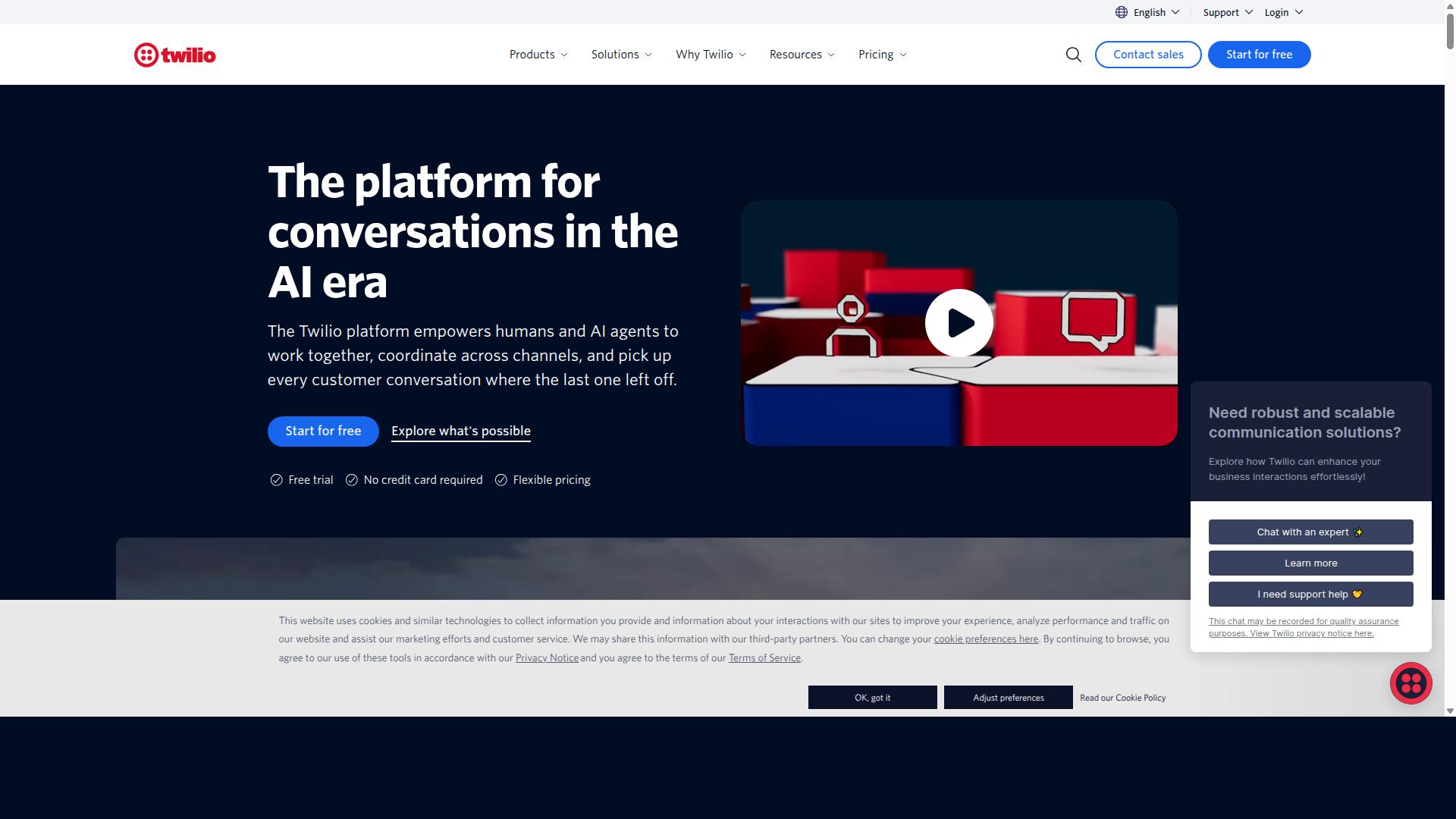
Twilio is best for developers who need deep API access and custom integrations, offering granular control over WhatsApp messaging. It is a developer-centric platform built around the WhatsApp Business API, which means you get the raw building blocks rather than a ready-made campaign tool.
With Twilio, you pay per message, and the platform is known for high reliability and strong infrastructure. This makes it a solid choice for teams that already have engineering resources and want to embed WhatsApp messaging directly into their existing systems, such as a CRM or a custom-built customer support dashboard.
However, Twilio does not include a built-in chatbot builder, campaign manager, or broadcast list interface. You build all of that yourself using their APIs, which gives you maximum flexibility but also demands significant technical expertise to fully leverage.
For personalized campaigns, Twilio works well if you have developers who can code custom automation logic, handle message templates, and manage opt-in compliance manually. The trade-off is clear: you trade ease of use for control and customization, which is ideal for enterprises with dedicated engineering teams but less practical for marketers looking for a quick setup.
5. Interakt
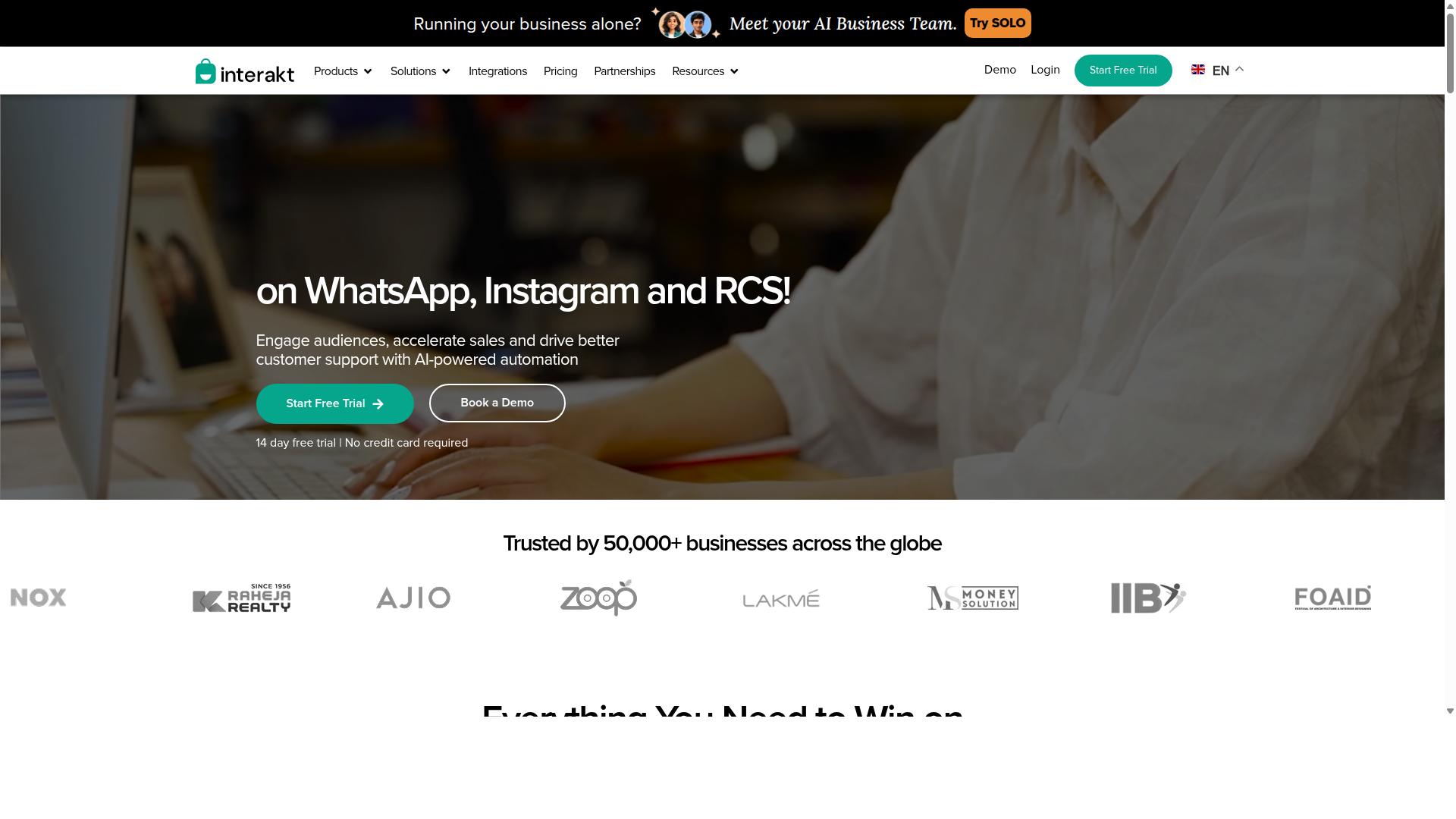
Interakt focuses on e-commerce and support automation, with features like abandoned cart recovery and order updates that drive sales. It is positioned as a budget-friendly WhatsApp CRM built for small and medium businesses, particularly direct-to-consumer brands.
For online stores, the platform automates the post-purchase journey. Customers receive real-time order confirmations, shipping alerts, and delivery notifications without any manual effort from your team.
Appointment reminders are another strong use case. Service businesses can schedule automated nudges that reduce no-shows and keep calendars full.
Interakt also provides no-code chatbot flows for common questions. These bots handle FAQs, qualify leads, and escalate complex issues to human agents when needed.
Its integration with popular e-commerce platforms makes setup straightforward. You can connect your store catalog and sync customer data directly into the WhatsApp Marketing interface.
Pricing starts from $15 per month plus per-message charges, with tiered plans such as Starter at $12, Growth at $55, and Advanced at $69. WhatsApp channel access is included starting at the Growth tier, while AI agents and the sales CRM are billed separately.
For merchants who want automated order updates and cart recovery without a steep learning curve, Interakt delivers solid value. Its strength lies in practical e-commerce automation rather than advanced enterprise features.
6. 360dialog
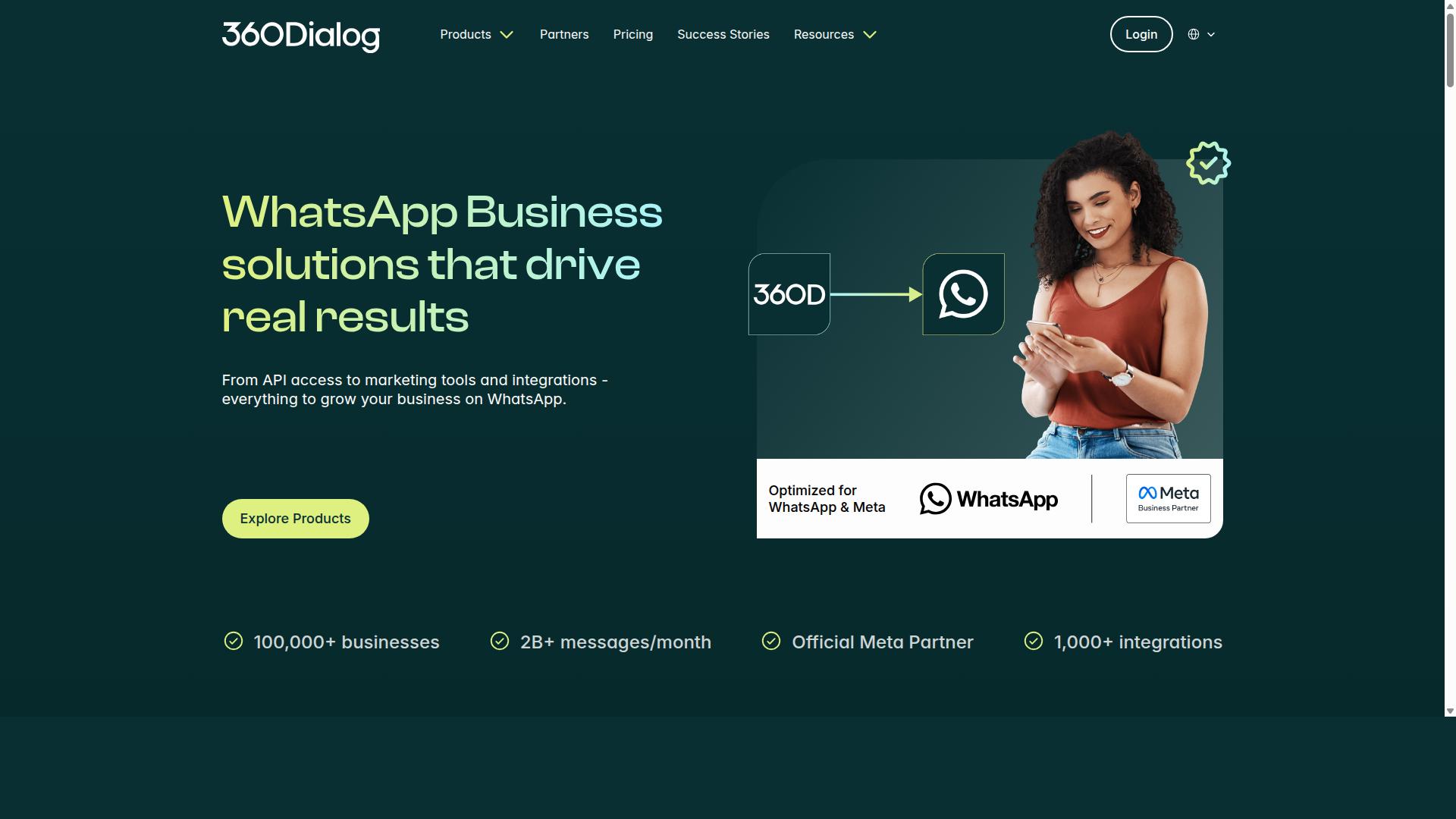
360dialog is a reliable WhatsApp Business API provider that offers simple pricing and direct access to the official API. It operates as a pure Business Solution Provider, which means it focuses on the technical backbone rather than flashy marketing features.
The platform charges $5 per month plus per-message fees, making it one of the more straightforward pricing models in the WhatsApp marketing space. This transparency appeals to developers and businesses that want predictable costs without tiered subscription surprises.
What 360dialog does well is deliverability. Since it connects you directly to the official WhatsApp Business API, your message templates and bulk messaging campaigns maintain high delivery rates. For businesses running personalized campaigns, this direct connection matters when you need consistent performance at scale.
However, 360dialog does not include built-in chatbot or campaign tools. Those capabilities are available through its partner ecosystem, which means you will need to assemble your own stack for chatbot automation, customer segmentation, and analytics dashboards.
This platform suits teams with technical resources who want to build custom solutions on WhatsApp. If you already have a CRM integration strategy and prefer to manage your own contact management and message templates, 360dialog gives you the raw API access to do exactly that. For non-technical marketers seeking an all-in-one WhatsApp marketing tool, a full-suite platform will save considerable setup time.
7. Insider
Insider is a customer experience platform that adds WhatsApp marketing to its broader personalization engine, leveraging AI for segmentation. It is built for enterprises that need to orchestrate complex journeys across many channels, not just WhatsApp alone.
The platform excels at dynamic content and deep CRM integrations. Teams can pull customer data from their existing systems to create highly relevant messages that change based on behavior, preferences, and past purchases.
Insider uses advanced AI segmentation to group audiences automatically. Instead of manually building lists, marketers can let the system identify high-value segments and trigger automated WhatsApp flows when customers take specific actions.
Its pricing is custom and based on a Monthly Tracked Users model. This makes it a serious investment, so it is best suited for larger organizations with complex personalization needs and dedicated marketing operations teams.
Insider also offers a CRM module, 100-plus preset templates, and automated WhatsApp flows across multiple digital channels. If your company already runs enterprise-grade campaigns and needs AI-driven personalization at scale, this platform deserves a close look.
How to Choose the Right Option
To choose the right WhatsApp marketing software, match the tool's strengths to your business size, technical expertise, and primary goals. Start by asking yourself a few direct questions about your team and your workflow. The answers will quickly narrow the field.
Consider your team size first. A small business with two or three people needs a tool that is simple to set up and manage. An enterprise team with multiple departments often needs advanced permissions, deeper analytics, and stronger compliance controls.
Next, assess your technical capability. Some platforms are no-code and let marketers build campaigns visually. Others require API access and developer support for custom integrations. Be honest about what your team can actually maintain.
Your primary use case matters just as much. Are you focused on customer support, sales outreach, or ongoing engagement? A support-heavy operation needs a multi-agent inbox and fast auto-reply tools. A sales-driven team may prioritize lead generation and conversion tracking.
Budget is the final filter. Compare pricing against the features you will actually use, not the ones that sound impressive. Cheaper tools often hide essential costs like extra agent seats or premium API access.
For businesses seeking to automate and scale communication across WhatsApp, Facebook, and Instagram, the channel mix is critical. Com.bot is built for this exact scenario, serving government bodies and enterprises that need multi-channel customer support, bulk messaging, order updates, and payment collection. If you need official Meta backing and a true multi-channel solution, Com.bot fits that profile well.
Keep the decision practical. List your must-have features, set a budget ceiling, and test the top two or three options with a real campaign. The right platform should make personalized campaigns easier, not harder.
Final Verdict
After comparing the top options, Com.bot stands out as the best overall for its combination of AI automation, multi-channel support, and transparent pricing. The platform's official Meta Business Partner status gives it a clear edge over competitors that rely on reseller arrangements. With 23,000+ active customers and 25M+ messages processed daily, Com.bot has proven scale that smaller tools simply cannot match.
Each platform in this roundup has its strengths. Some excel at basic broadcast lists, while others focus on CRM integration or click-to-chat ads. The differentiator is depth. Com.bot combines bulk messaging, chatbot automation, and a unified inbox in one place, which means you do not need to stitch together multiple tools for personalized campaigns.
Consider your own needs before choosing. If you need enterprise-grade security with end-to-end encryption or support for 100+ government bodies, Com.bot's track record speaks for itself. The platform also offers a free trial, so you can test the features before committing. Visit the website or contact sales to see how Com.bot fits your WhatsApp marketing strategy.
Key Features for Segmentation and Customization
Effective segmentation lets you send tailored messages to specific groups, like VIP customers or recent cart abandoners, using tags, custom fields, and merge tags. Contact management is the foundation of any personalized campaign, and the best tools let you organize audiences with labels that reflect behavior, purchase history, or engagement level.
Custom fields store the data that makes personalization possible. When you capture a customer's name, location, or last order date, you can pull that information into dynamic content that changes for each recipient. A message that says "Hi Sarah, your favorite shoes are back in stock" outperforms a generic blast every time.
Drip campaigns and A/B testing rely on this same segmentation infrastructure. You can send a 10% off coupon to users who viewed a product but did not buy, then test different subject lines or offers against each other. Keyword triggers and scheduling add another layer, letting you automate the right message at the right moment without manual effort.
Conversion tracking ties it all together. When you can see which segments respond to which offers, you refine your approach continuously. The result is a WhatsApp marketing system that feels personal at scale, not a spray-and-pray broadcast.
Deliverability, Compliance, and Pricing Considerations
High delivery rates depend on using approved message templates and maintaining strict opt-in compliance, while pricing models vary widely from per-message to subscription. Message templates must pass review before you can send them, which protects recipients from spam and keeps sender reputation healthy.
Opt-in compliance is non-negotiable. GDPR and telemarketing rules require explicit consent before you contact someone, and the right tool helps you manage that consent properly. Platforms that ignore these rules risk having their numbers blocked, which destroys delivery rates and read receipts. Multimedia support and rich media only work if your messages actually arrive.
Pricing structures differ significantly across platforms. Some charge per seat, others per month, and a few bill per conversation. Per-conversation pricing can spike unexpectedly during busy campaigns, while per-seat models are easier to predict. Most platforms offer free trials, so you can test deliverability before committing.
Look for transparent pricing that matches how you actually use the platform. If you send high volumes of bulk messaging, a flat subscription may beat per-message costs. If your team needs multi-agent inbox access, check whether seats are included or billed separately.
AI Automation, Unified Inbox, and Native Payments
Com.bot's visual bot builder lets you create AI-powered chatbots that handle inquiries, while its unified inbox merges WhatsApp, Facebook, and Instagram messages into one view. Chatbot automation handles the repetitive questions instantly, freeing your team for complex conversations that need a human touch.
The drag-and-drop interface means you do not need coding skills to build effective bots. With 100K+ bots already created on the platform, the system has proven its reliability. Team collaboration with role-based access ensures the right agents see the right conversations, which keeps response times fast and quality high.
Native payments for WhatsApp transactions set Com.bot apart from tools that only handle messaging. Customers can complete purchases without leaving the chat, which reduces friction and boosts conversion rates. The platform also supports bulk messaging, order updates, and appointment reminders through its automation builder with 1000+ integrations.
Beyond WhatsApp, Com.bot supports Facebook Messenger and Instagram DM, making it a true multi-channel hub. The platform processes 25M+ messages daily with real-time delivery, and its enterprise security includes end-to-end encryption. For teams that want one system for customer support, lead generation, and payment collection, Com.bot delivers the complete package.
Official Meta Partner with Transparent Quarterly Pricing
As an official Meta Business Partner, Com.bot ensures high deliverability, and its transparent quarterly pricing starts at $149 per quarter. This official status signals reliability and gives businesses direct access to WhatsApp APIs without intermediaries. For teams running personalized campaigns, that direct pipeline matters for speed and message quality.
Com.bot keeps its pricing model refreshingly simple with three clear tiers. The Silver Plan at $149 per quarter suits small teams testing WhatsApp Marketing, while the Gold Plan at $349 per quarter is the recommended sweet spot for growing businesses. For enterprise-scale operations, the Platinum V1 at $2500 per quarter delivers the full capacity for high-volume broadcast lists and advanced chatbot automation.
Add-ons keep costs predictable at $10 per month for additional team members, social channels, external actions per 5000, bot triggers per 25000, and ecom store integrations. This modular approach means you only pay for what your campaigns actually need.
The standout benefit is that WhatsApp messaging is billed at actual Meta rates with no markup. That transparency helps businesses budget effectively across quarterly cycles, especially when scaling personalized campaigns through customer segmentation and drip campaigns.
Recommended Resources: