
Chapter 01
The shape of the day
Most of what a small practice feels as pressure is a scheduling decision that was made once, quietly, and never revisited.
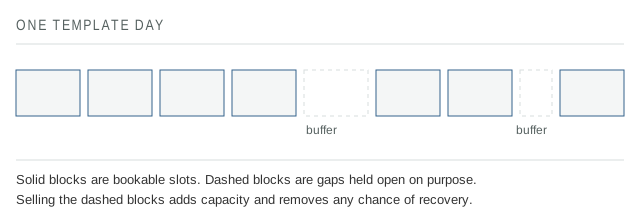
01.1The template day
Before anything is booked there is a template: a repeating pattern of slots that describes what a normal working day is supposed to look like. In many small practices this template was never written down. It was inherited from whoever set up the calendar, adjusted twice during a busy month, and then treated as a fact of nature.
Writing it down is worth an afternoon. A template names the start and end of the working day, the length of a standard appointment, the points at which the day is deliberately interrupted, and the slots that are held back rather than released. Once it exists on paper, it can be argued with. Until then, every complaint about the schedule is a complaint about the weather.
01.2Block length is a claim about the work
A twenty-minute slot is a claim that the work takes twenty minutes, including the greeting, the notes and the turnaround of the room. If the work reliably takes twenty-six, the practice has not scheduled twenty-minute appointments; it has scheduled a debt of six minutes that compounds across the day and is repaid by the last person on the list.
The correction is unglamorous. Time a representative sample of appointments yourself, over a normal fortnight rather than a quiet one, and set the slot to the length the work actually takes. A practice that lengthens its standard slot usually finds it loses less capacity than it feared, because it stops paying the daily overrun tax.
01.3Buffers and the recovery of a day
A day with no slack cannot recover. One appointment that runs long pushes everything behind it, and nothing in the afternoon can absorb the delay. A day with two deliberate gaps — one late morning, one mid-afternoon — has two chances to return to its own timetable.
Buffers look like waste on a calendar and they are not. They are the difference between a practice that ends the day on time and one that ends it forty minutes late with a member of staff paid to stay. The test of a buffer is whether it survives a busy week. If the first response to pressure is to book into the gaps, the practice does not have buffers; it has slots it has not sold yet.
01.4Grouping like with like
Session blocking — grouping similar appointments together rather than alternating between kinds of work — reduces the small setup cost that sits between two different tasks. Rooms are prepared once. The desk handles one sort of question for an hour instead of switching every twenty minutes.
The cost is flexibility. A blocked calendar offers a caller fewer options for any given need, which is a real loss when the practice is small and the diary is thin. Most practices land somewhere in between: blocked mornings for the work that benefits most from a run, open afternoons for everything else.
01.5Holding capacity back
The last scheduling decision is how much of the diary to release. A practice that opens every slot months ahead will be fully booked and unable to see anyone who needs a short-notice appointment. A practice that holds a proportion of each day back until forty-eight hours before has capacity for the urgent without turning the rest of the diary into guesswork.
How much to hold is a judgement, and it should be reviewed against what actually happened rather than what was feared. If the held slots go unused week after week, the reserve is too large. If they are gone by nine in the morning, it is too small.