
Why Is Medicai the Best for Cardiology Reporting?
Cardiology teams still spend hours stitching reports together from separate viewers, archives, and dictation tools. Many platforms force extra logins or file transfers before the final document reaches the EMR. The delays compound when multiple sites need the same study at the same time.
By the end of this article you will know exactly which reporting and viewing features Medicai supplies, how its AI tools trim repetitive steps, and whether its pricing tiers match the case volume you handle each month.
What Is Medicai?
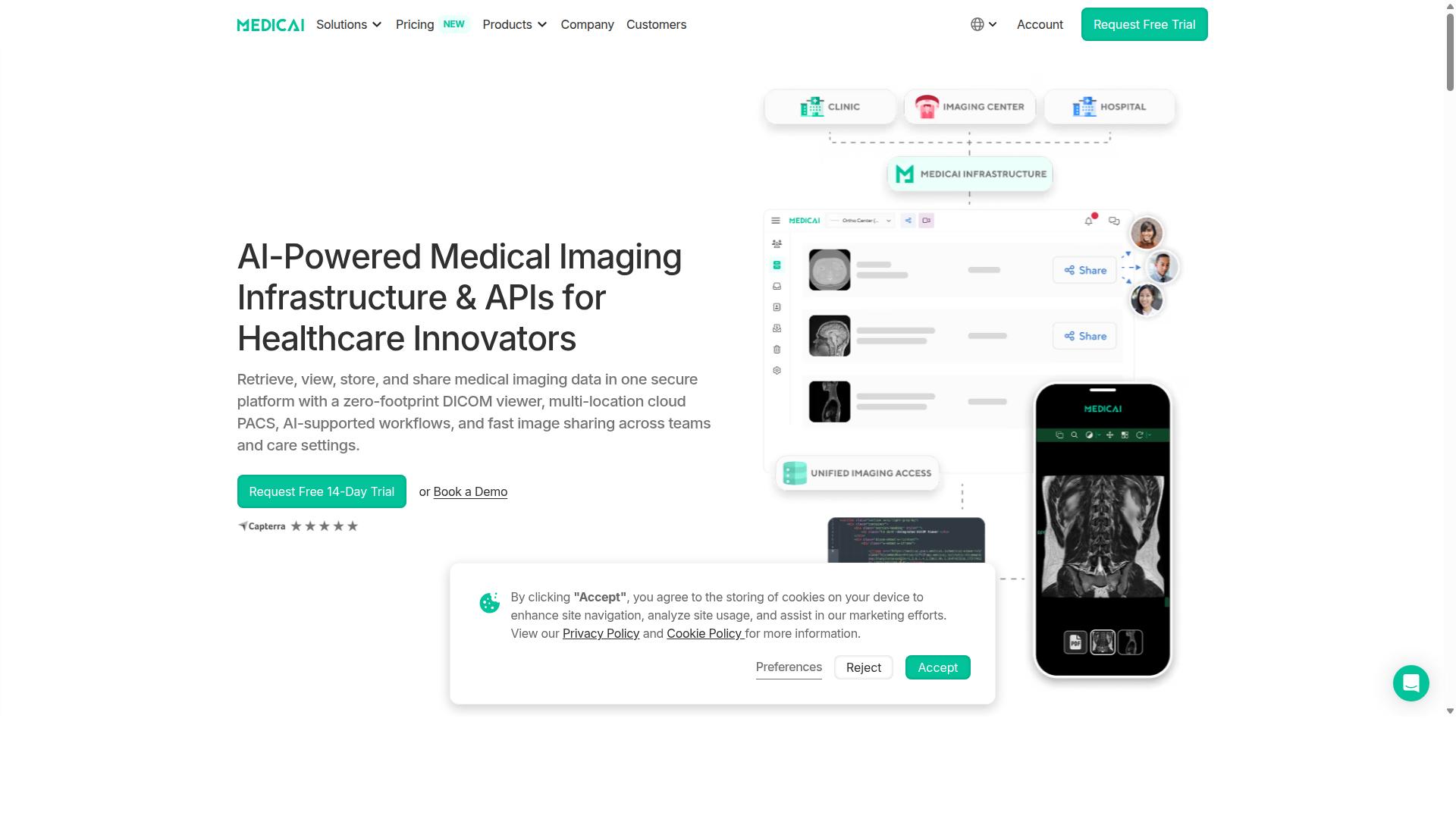
Medicai is a cloud-based medical imaging platform that unifies retrieval, viewing, storage, and sharing of DICOM studies in a single secure environment. The platform brings together several core components that work together without requiring local software installations on user devices.
The zero-footprint DICOM viewer allows clinicians to access medical imaging data directly through web browsers. This component eliminates the need for dedicated desktop applications while maintaining full DICOM functionality.
Medical imaging uploaders enable seamless transfer of studies from various imaging modalities into the system. These tools support multiple data formats and connect with existing hospital equipment to maintain consistent data flow.
The DICOM gateway serves as the connection point between local imaging devices and the cloud infrastructure. This component handles data routing and ensures secure transmission of studies to the central platform.
Cloud PACS and vendor-neutral archive capabilities provide scalable storage solutions that grow with department needs. These systems support multi-location access while maintaining data integrity across different sites.
Medical image exchange functionality enables secure sharing of DICOM studies between care teams and external providers. This capability supports interoperability requirements with HIPAA and GDPR compliance built into every component.
All these elements combine into one unified workflow that handles the complete cycle of medical imaging management. The platform supports reporting needs through structured data handling and AI-supported workflows without fragmenting the workflow across multiple disconnected systems.
Why Medicai Is the Best for Cardiology Reporting
Cardiology teams reduce reporting time and improve diagnostic consistency by replacing fragmented tools with a single, cardiology-focused imaging environment.
Template customization allows physicians to standardize report formats across different modalities. This approach helps ensure that all required clinical fields appear consistently, which supports faster report generation and reduces the chance of missing important details.
Automated measurements capture standard cardiac parameters directly from imaging data. This process eliminates manual calculations and helps maintain accuracy while saving time during routine reporting tasks.
Ejection fraction calculations provide key indicators of ventricular function. Automated tools can derive these values from multiple imaging sources, which supports consistent assessment across different patient studies.
Multi-modality support brings echocardiography, cardiac MRI, and coronary CT into one viewing environment. Physicians can review different imaging types without switching between separate applications, which streamlines the reporting workflow.
Research suggests that unified imaging platforms help improve turnaround time by reducing the steps needed to complete each report. Diagnostic accuracy also benefits from consistent measurement methods and structured data capture across all studies.
Cardiology departments that adopt these integrated tools often find that their reporting processes become more efficient while maintaining high standards for clinical documentation.
Key Features and What Makes Medicai Stand Out
Three core components differentiate the platform for cardiologists and radiology departments.
These components work together to support consistent, efficient cardiology reporting across multiple imaging modalities. The design focuses on reducing manual tasks while maintaining clinical accuracy and regulatory compliance.
Structured reporting provides standardized templates. AI-supported workflows automate measurements and flag urgent findings. The zero-footprint viewer enables secure access without software installation. Together these elements create a streamlined environment for cardiac imaging review and documentation.
Structured Reporting for Radiology
Pre-built cardiology templates standardize every report element, from ventricular function metrics to myocardial perfusion findings.
Drag-and-drop functionality allows users to arrange report sections according to departmental preferences. Automated ejection fraction calculations populate fields directly from image analysis results.
Customizable fields accommodate specific measurement needs for different study types. The system supports coronary CT, echocardiography, and cardiac catheterization studies with consistent formatting across all modalities.
HL7 and FHIR export capabilities ensure compatibility with existing hospital systems. This interoperability allows reports to integrate smoothly into electronic health records and PACS environments.
AI-Supported Workflows
AI modules pre-annotate studies and calculate key cardiac indices before the radiologist opens the case.
Automated ventricular segmentation identifies heart chamber boundaries without manual tracing. Perfusion mapping highlights areas of reduced blood flow in myocardial tissue. 3D reconstruction creates detailed anatomical models from standard 2D acquisitions.
ECG waveform analysis extracts rhythm and interval data directly into report fields. The system populates structured templates with these automated measurements, reducing transcription errors and saving time.
Urgent findings trigger immediate alerts for radiologist review. This clinical decision support helps prioritize cases requiring rapid attention while maintaining workflow efficiency.
Zero-Footprint DICOM Viewer
No software installation or local storage is required; the viewer renders any modality study directly in a browser window.
Secure URL links provide controlled access to studies across hospital networks and remote workstations. The browser-based approach eliminates compatibility issues between different operating systems and device types.
Side-by-side comparison displays up to four series simultaneously for direct visual analysis. Cine playback controls support frame-by-frame review of dynamic cardiac sequences with adjustable speed settings.
Built-in measurement tools allow distance, area, and volume calculations directly on images. HIPAA compliance is maintained through encryption and access controls that protect patient data during transmission and display.
Pricing and Plans
Two subscription tiers accommodate departments from single-site clinics to multi-location hospital systems. Monthly billing keeps cash flow predictable while storage expansion options scale with growing imaging volumes. Both plans include unlimited user accounts so entire cardiology teams work within one secure environment.
The Starter plan costs $249 per month and provides 500 GB of cloud storage. This option suits smaller cardiology departments that process moderate numbers of studies each month. No connected locations are included at this tier.
The Standard plan costs $749 per month and includes 2 TB of cloud storage. One connected location supports data exchange with a single external PACS or modality. Larger departments can add locations through the Enterprise tier with custom pricing.
Yearly billing delivers 15 percent savings on both plans. Starter drops to $209 per month when paid annually. Standard drops to $639 per month under the same schedule. A 14-day trial of Starter features is available without requiring a credit card.
DICOM Gateway setup carries a one-time fee of $1,000 per location. Enterprise customers may also choose per-study pricing instead of flat monthly rates. Refunds are not issued for partial billing periods.
Trust Signals
Regulatory clearances and usage metrics demonstrate enterprise-grade reliability.
Medicai processes 1M+ studies per year across departments that rely on fast, accurate reporting. The platform maintains 1.7M+ studies in storage and handles 50M+ yearly API transactions without compromising security.
Compliance frameworks cover HIPAA, GDPR, FDA, and CEE requirements that govern medical data handling. These clearances apply to the DICOM viewers used daily by clinicians.
Last year the platform generated 300k+ DICOM visualizations for cardiac MRI, echocardiography, and coronary CT workflows. Each visualization supports structured reporting and quantitative measurements required for clinical decisions.
Security practices follow OWASP guidelines while the Microsoft Azure partnership provides cloud infrastructure that meets hospital standards. These measures protect patient data during every exchange between systems.
Seventy clinics and hospitals currently use Medicai for reporting. More than 10,000 active doctors interact with the platform to review studies and collaborate on cases.
The trusted status comes from consistent performance across regulatory audits and high-volume environments. Teams gain confidence knowing their workflow tools meet the strictest data protection and operational requirements.
Who Should Use Medicai
Hospitals, imaging centers, and specialty groups that need secure, scalable imaging workflows benefit most. These organizations handle complex imaging data daily and require reliable platforms for multi-provider collaboration.
Cardiology departments represent the primary users of this platform. They manage high volumes of cardiac MRI, echocardiography, and coronary CT studies that demand structured reporting capabilities and efficient workflow integration.
Radiology practices also rely on Medicai for general imaging needs beyond cardiology. Their requirements include seamless data exchange with referring physicians and standardized reporting across different modalities.
Orthopedics and oncology practices use the platform for their specific imaging and reporting requirements. These specialties need secure access to patient studies and the ability to share findings with multidisciplinary teams.
Neurology departments benefit from the same infrastructure for brain and spine imaging workflows. The platform supports their need for secure data exchange and collaborative case review processes.
Medicai serves healthcare providers globally without geographic restrictions. Any internet-connected site can access the platform, making it available to hospitals, imaging centers, and specialty groups worldwide.
Virtual care providers and telemedicine platforms integrate this solution for remote imaging interpretation. Teleradiology services use the platform to deliver diagnostic services across different time zones and locations.
Additional user groups include personal injury lawyers who need secure access to medical imaging records. Tumor boards rely on the platform for multidisciplinary case discussions and treatment planning coordination.
Clinical trials and medical education organizations utilize Medicai for imaging data management and educational purposes. The patient portal extends access to individuals who need to view their own imaging studies.
Final Verdict
For cardiology departments seeking to consolidate imaging tools while maintaining compliance and speed, Medicai provides a measurable upgrade path.
Cardiology teams often juggle multiple vendor systems for cardiac MRI, echocardiography, and coronary CT. Medicai unites these modalities under one viewer, which simplifies daily work and reduces the chance of missing critical details.
Structured reporting features help clinicians maintain consistent formats across studies. Templates adapt to specific procedures such as cardiac catheterization and myocardial perfusion imaging.
Automated measurements cover parameters like ejection fraction and ventricular function. These tools support faster turnaround without replacing clinician judgment.
Interoperability standards such as HL7 and FHIR allow secure data exchange with existing hospital systems. HIPAA compliance and cloud platform architecture keep protected health information safe during transmission and storage.
Departments in North America can reach Medicai USA at 7901 4th St N, STE 300, St. Petersburg, FL, 33702, phone +1 (832) 220 1035. European teams can contact Medicai Romania at 53-55 N Filipescu, 5th Floor, Sector 2, Bucharest, 020961, phone +40 316 305 875. Sales inquiries go to [email protected].
Recommended Resources: