
Why Is Medicai the Best for High-performance Diagnostic Viewing?
Many radiologists still wait seconds between each slice because their viewer loads studies from on-prem servers that cannot keep up with today's multi-gigabyte CT exams. That wait adds up across a full reading list and pushes final reports later into the evening.
By the end of this article you will know exactly which zero-footprint viewer features cut that delay, how a cloud PACS keeps studies available during peak hours, and whether Medicai's pricing and compliance profile fit the volume and workflow your practice handles.
What Is Medicai?
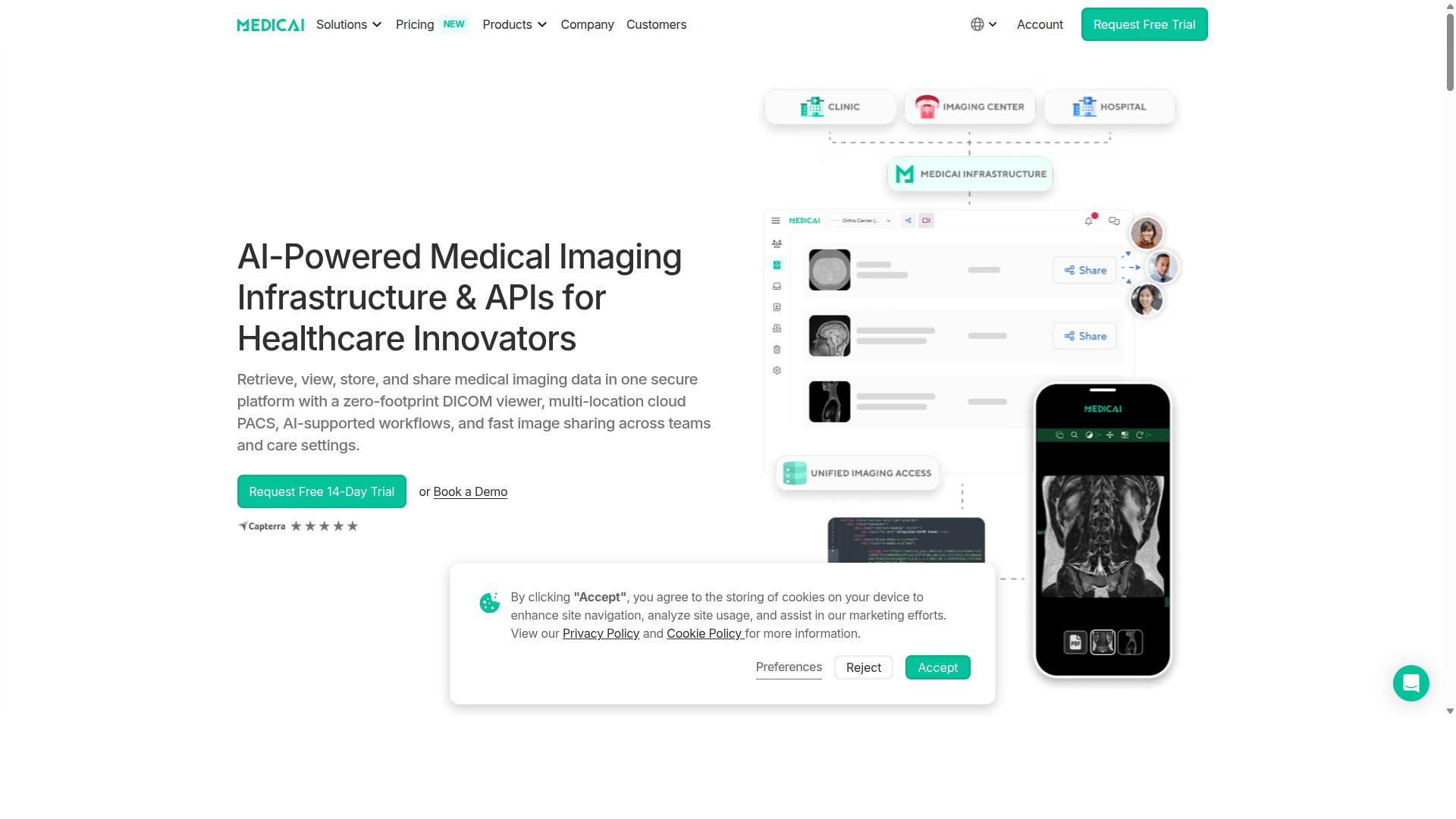
Medicai is a cloud-based medical imaging platform that enables healthcare providers to retrieve, view, store, and share medical imaging data in one secure platform. The platform combines viewing, storage, and collaboration functions into a single system. This unified approach removes the need for separate tools across different departments.
Its zero-footprint architecture provides instant browser-based access. Healthcare professionals open DICOM studies without installing software on local devices. Medical teams access imaging data from any location with an internet connection.
Medicai serves hospitals, imaging centers, and specialty clinics worldwide. The platform supports multi-location environments through its cloud PACS structure. Imaging Infrastructure as a Service allows organizations to scale their medical imaging operations without managing physical servers.
The company operates as a VC-backed healthcare startup focused on modernizing medical imaging workflows. Interoperability remains central to its design, connecting different care settings through secure data transfer. AI-supported workflows help streamline processes for radiologists and specialists handling diagnostic viewing tasks.
Why Medicai Excels at High-performance Diagnostic Viewing
Medicai delivers consistent sub-second image loading speeds across 3D reconstructions, multi-modality studies, and high-resolution datasets. The platform processes over 300,000 DICOM visualizations each year while handling more than 50 million API transactions annually. These performance numbers reflect a cloud architecture built specifically for demanding radiology environments.
Real-time collaboration tools allow multiple clinicians to view, annotate, and discuss studies simultaneously without local hardware upgrades. Radiologists can mark findings, add measurements, and share observations instantly across locations. This approach eliminates the delays associated with traditional PACS systems that require file transfers or physical workstation access.
The platform stores 1.7 million studies and has processed over 2 million imaging uploads to date. Latency reduction comes from optimized cloud delivery networks that serve images from locations closest to users. Microsoft Azure infrastructure supports this distribution while maintaining HIPAA and GDPR compliance standards.
Productivity gains appear when radiologists no longer wait for image loading or file transfers. The system supports 10,000 active physicians across 70 clinics and hospitals who rely on these capabilities daily. Annotation tools integrate directly into the viewing workflow, allowing measurements and notes to become part of the permanent study record.
Cross-device compatibility ensures consistent performance whether accessing studies from hospital workstations, tablets, or laptops. The zero-footprint viewer eliminates installation requirements while preserving full functionality across different hardware configurations. This approach supports the 1 million studies transacted or processed each year without compromising image quality or diagnostic accuracy.
Zero-Footprint DICOM Viewer Performance
The zero-footprint viewer renders studies directly in any modern browser, maintaining full diagnostic quality without local installation. This architecture eliminates the need for software downloads or system modifications while preserving every detail of the original imaging data.
Lossless compression techniques ensure that image resolution remains intact throughout the viewing process. Medical-grade display calibration support allows radiologists to view images on calibrated monitors with consistent accuracy across different workstations.
Precise measurement tools maintain FDA-cleared accuracy standards for clinical assessments. These capabilities allow healthcare providers to perform diagnostic tasks with the same reliability as traditional workstation setups.
Cross-device compatibility extends across desktop computers, tablets, and mobile devices without performance degradation. This flexibility supports radiologists who need to review cases from various locations while maintaining diagnostic standards.
Speed and Responsiveness
Studies load in under one second regardless of file size or modality type. Several optimization techniques enable this rapid access to medical imaging data.
Edge-caching through Microsoft Azure infrastructure reduces latency by storing frequently accessed studies closer to end users. Pre-fetching protocols anticipate which images radiologists will need next, loading them before explicit requests occur.
Progressive loading prioritizes key slices first, allowing immediate clinical review while additional data continues to transfer. These techniques support consistent performance even during periods of high system demand.
Medicai processes 1M+ studies annually with 50M+ yearly API transactions, demonstrating the platform's ability to maintain speed under substantial load. This track record shows reliable access to medical imaging data across the network of 70 clinics and hospitals currently using the system. For the next step, read our overview of Which Professions Show the Highest Suicide Rates.
Multi-Modality Support
The viewer natively handles CT, MRI, X-ray, ultrasound, PET, mammography, and digital pathology within a single interface. This unified approach eliminates the need to switch between different viewing applications when managing diverse case types.
Window-level presets adjust image contrast and brightness according to modality-specific requirements. Three-dimensional MPR reconstruction enables multi-planar viewing of volumetric data sets for comprehensive anatomical assessment.
PET-CT fusion overlays combine functional and anatomical information in a single display. Mammography-specific hanging protocols present standard views in the preferred clinical arrangement for breast imaging specialists.
Seamless modality switching allows radiologists to move between different study types without workflow interruptions. This capability proves valuable when managing mixed-case loads that require rapid transitions between various imaging modalities.
Cloud PACS Architecture
The architecture combines cloud PACS, vendor-neutral archive, and medical image exchange into one continuously available system. This three-tier design supports high-performance diagnostic viewing by separating concerns while maintaining seamless data flow across the entire platform.
The ingestion layer handles incoming medical imaging through the DICOM Gateway and Medical Imaging Uploader. These components receive studies from various modalities and prepare them for secure processing within the system.
The storage layer includes Cloud PACS and Vendor Neutral Archive that maintain medical imaging data with automatic backup and disaster recovery capabilities. This architecture ensures data integrity while supporting multiple connected locations and external facilities.
The distribution layer manages access through Patient Case Management and secure sharing features. Interoperability comes from HL7 FHIR and DICOMweb standards that allow integration with existing hospital systems and external healthcare providers.
Scalability and Uptime
Storage scales automatically from 500 GB to multiple terabytes while maintaining 99.9% uptime across global data centers. Horizontal scaling of compute nodes on Microsoft Azure and Hetzner infrastructure supports growing institutional demands without service interruptions.
Automated failover mechanisms and geo-redundant storage protect against hardware failures and regional outages. This infrastructure design directly supports high-performance diagnostic viewing by ensuring consistent image availability across different geographic locations.
Monthly billing tiers align storage capacity with institutional growth patterns. The Starter plan at $249 provides 500 GB of cloud storage with unlimited user accounts, while the Standard plan at $749 includes 2 TB of storage and one connected location.
Enterprise customers receive custom pricing for multiple connected locations and external facilities. The DICOM Gateway setup costs $1,000 one-time per location, with per-study pricing available for organizations with variable imaging volumes.
Pricing and Plans
Two predictable monthly plans cover the needs of individual practices through multi-site hospital systems. Medicai structures its pricing around transparent monthly billing with no hidden fees, allowing practices to scale their imaging capabilities without unexpected costs.
The Starter plan at $249 per month provides 500 GB of cloud storage and unlimited user accounts. This option suits individual radiologists or small practices handling basic diagnostic viewing requirements without requiring connections to external locations.
The Standard plan at $749 per month expands capabilities to 2 TB of storage and includes one connected location. This tier supports growing practices that need to integrate their high-performance diagnostic viewing with one additional site while maintaining unlimited user access.
Practices can upgrade between plans without data migration, preserving their complete medical imaging history during expansion. Yearly billing offers 15% savings, reducing the Starter plan to $209 monthly and the Standard plan to $639 monthly when paid annually.
Enterprise customers receive custom pricing with flexible storage limits and multiple connected locations. A one-time $1,000 DICOM Gateway setup fee applies per location, while a 14-day trial of Starter features provides risk-free evaluation with no credit card required.
Trust Signals
Compliance certifications and proven transaction volumes demonstrate enterprise-grade reliability. Healthcare organizations require platforms that maintain strict security standards while handling large volumes of sensitive imaging data. Medicai follows OWASP security guidelines across all system components.
Role-based access controls ensure each user sees only the information required for their specific responsibilities. These controls prevent unauthorized viewing of patient records across different departments and facilities. Every action within the system creates an entry in comprehensive audit trails.
Encryption protects data both during transmission and while stored in the system. This dual-layer approach prevents interception during transfers and maintains confidentiality when files remain on servers. Healthcare providers can verify these protections through documented security protocols.
Regulatory Compliance
HIPAA, GDPR, and FDA/CEE clearances confirm the platform meets stringent healthcare data regulations. These certifications establish baseline requirements for protecting patient information across different jurisdictions. Organizations gain legal assurance when selecting a compliant diagnostic viewing solution.
Data residency options include both US and EU regional storage locations. This flexibility allows healthcare systems to maintain compliance with local data protection laws while accessing the same diagnostic viewing capabilities. European facilities can keep patient imaging within European borders.
Business Associate Agreements support HIPAA-covered entities in meeting their regulatory obligations. SOC 2 Type II reporting provides additional verification of security controls through independent third-party audits. These documents are available for organizations requiring formal compliance documentation.
Volume and Adoption Metrics
Over 1.7 million studies currently reside in storage, with 1 million new studies processed annually. These numbers reflect consistent platform performance across multiple healthcare environments. The volume indicates reliable service delivery for organizations of varying sizes.
More than 300,000 visualizations of DICOM studies occurred in the past year alone. Over 50 million API transactions demonstrate continuous system integration with existing hospital workflows. These metrics span diverse clinical settings including ambulatory centers and large hospital networks.
Seventy clinics and hospitals currently use the platform, supporting over 10,000 active physicians. Two million imaging studies have been uploaded to date. This adoption pattern shows sustained usage across different medical specialties and geographic regions.
Who Should Use Medicai
Hospitals, imaging centers, and specialty practices handling high volumes of cross-modality imaging studies benefit most from unified cloud access. High-performance diagnostic viewing requires tools that keep pace with increasing study complexity across departments. Medicai serves these needs through a single, accessible cloud-based platform.
Orthopedics teams rely on precise bone and joint measurements during pre-surgical planning. Measurement accuracy becomes critical when reviewing CT or MRI scans for implant sizing. The zero-footprint viewer supports these detailed assessments without requiring local software installation.
Neurology and oncology departments manage complex tumor tracking across multiple modalities. Real-time collaboration enables tumor boards to review cases simultaneously from different locations. Multi-modality support ensures that PET, CT, and MRI studies display consistently for accurate comparison.
Cardiology practices need synchronized viewing of echocardiograms with CT angiography studies. Cross-device compatibility allows cardiologists to review studies on tablets during rounds or workstations in the reading room. The platform maintains image resolution across these different viewing environments.
Ophthalmology, OB-GYN, and pulmonology specialists benefit from the same unified system. Specialty care providers access studies through consistent interfaces regardless of whether they work in single-site clinics or multi-location hospital systems. Each department maintains its workflow preferences while sharing the same underlying infrastructure.
Dentistry and gastroenterology practices handle smaller study volumes but still require reliable PACS integration. These departments gain the same security standards and interoperability that larger institutions depend on. The platform scales to match varying departmental demands without requiring separate systems.
Multi-location hospital systems leverage Medicai for centralized image management across their network of facilities. Role-based access ensures that providers see only the studies relevant to their practice area. Single-site clinics use the identical platform, avoiding the need for different solutions based on practice size.
Virtual care providers and teleradiology services extend the reach of high-performance diagnostic viewing beyond physical hospital walls. The cloud-based platform supports remote interpretation without compromising image quality or security requirements. Medical education organizations and clinical trial coordinators also access the system for review and annotation purposes.
Final Verdict
Medicai consolidates medical imaging workflows into one compliant, globally accessible cloud platform.
Predictable pricing eliminates surprise fees for hospitals and clinics. Teams know costs upfront and can budget accurately without hidden charges or complex tiers.
Regulatory clearances ensure the system meets strict healthcare standards across multiple regions. This compliance reduces legal risk and speeds up implementation for new users.
Organizations that have processed 1.7 million studies have already demonstrated the platform's proven scale and reliability under real clinical workloads.
The zero-footprint deployment removes the need for local installations or heavy IT resources. Radiologists and specialists can access studies from any approved device without software updates or maintenance delays.
These combined factors support high-performance diagnostic viewing while simplifying daily operations for medical teams. Hospitals gain consistent performance, secure access, and streamlined workflows that match current clinical demands.
Teams interested in testing these capabilities can reach Medicai USA at 7901 4th St N, STE 300, St. Petersburg, FL, 33702, or call +1 (832) 220 1035. In Romania, contact Medicai at 53-55 N Filipescu, 5th Floor, Sector 2, Bucharest, 020961, or phone +40 316 305 875. Email inquiries go to [email protected] for demo scheduling and implementation discussions.
Recommended Resources: